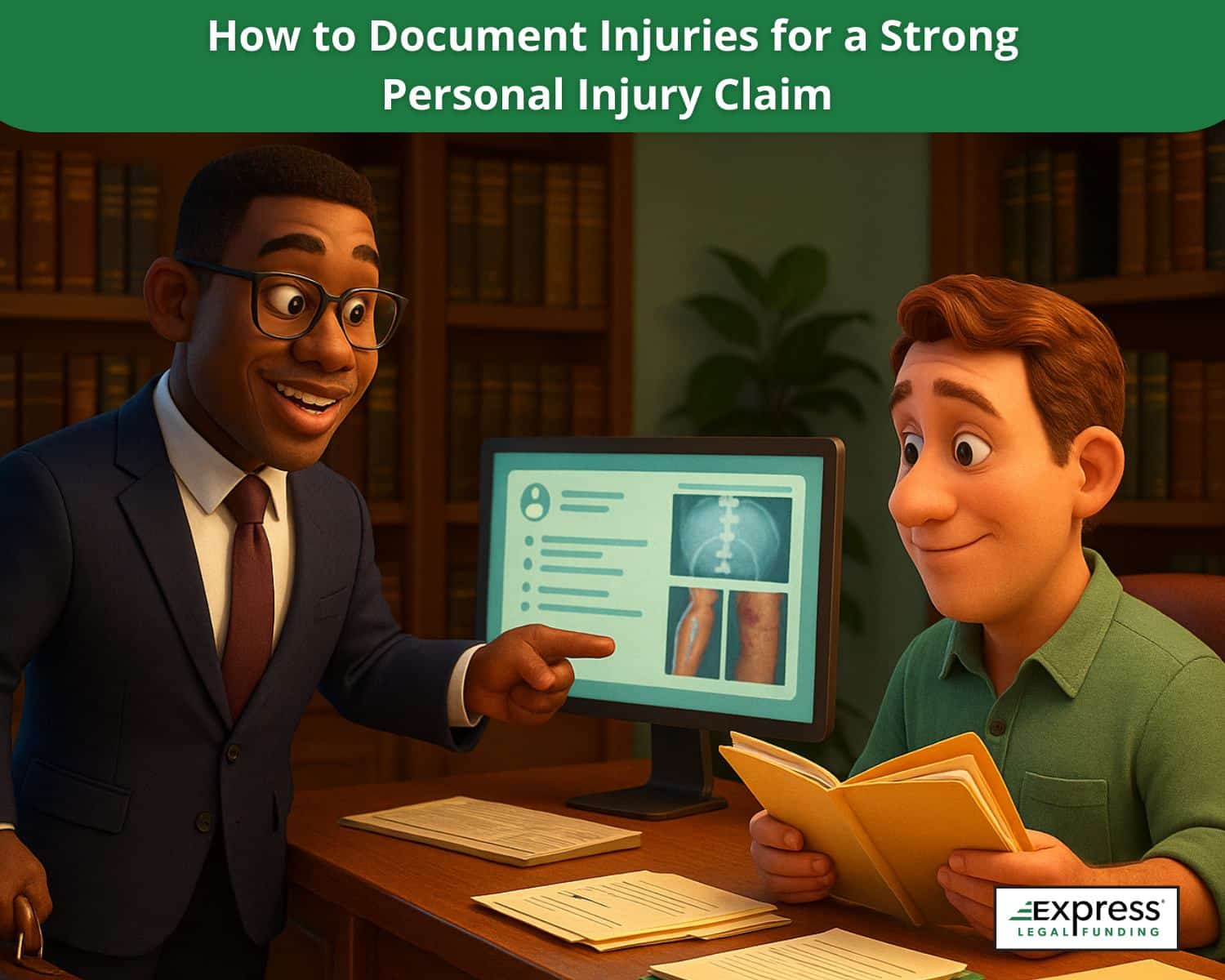
Insurance companies don’t accept “I’m hurt” as proof. They look for inconsistencies, missed appointments, vague symptom descriptions, and any gaps in your medical records.
Thin documentation gives insurers room to dispute your injuries and reduce your settlement.
Proper documentation protects your credibility. It shows how the injury happened, how it feels, how it impacts your day-to-day life, and how long your recovery takes. Here’s how to document your injury correctly from the start.
The steps in this guide reflect practices widely recommended by personal injury attorneys to help clients build strong, well-documented claims.
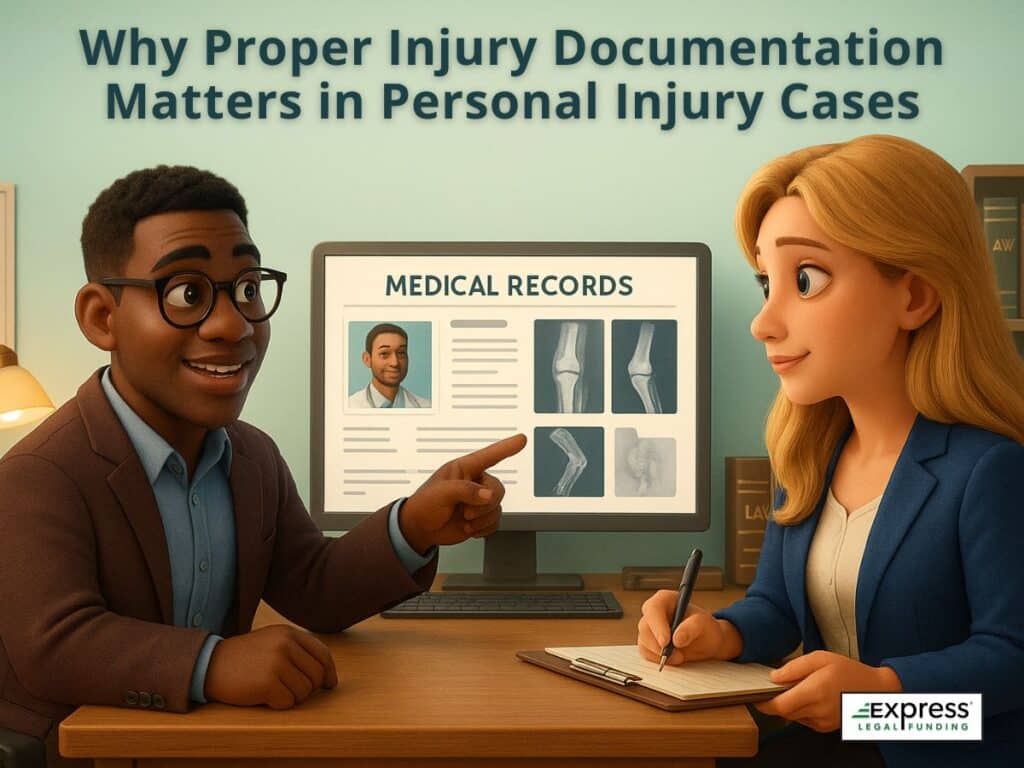
Why Proper Injury Documentation Matters in Personal Injury Cases
In personal injury cases, your documentation is your evidence, and medical records heavily impact accident claims and settlements.
Using Medical Documentation to Meet the Burden of Proof
Thorough medical documentation does more than record your treatment: it helps meet the burden of proof in a personal injury case. Insurance adjusters and medical experts rely on these records to verify the timing, severity, and legitimacy of your injuries and pain and suffering claims.
When detailed medical records support your accident report, they strengthen your credibility and your claim for compensation.
Even when injuries are real and painful, claims weaken when:
- Symptoms aren’t consistently reported
- Medical appointments are missed
- Photos are taken too late
- Journals show gaps
- Pain descriptions are vague
Insurance adjusters count on these mistakes. Thorough, consistent records shut down arguments that your injury was minor, exaggerated, or unrelated. In many personal injury cases, inconsistent documentation—not the injury itself—is what weakens claims.
Good documentation:
- Strengthens causation (proves the accident caused the injury)
- Shows severity and daily limitations
- Supports long-term medical needs
- Increases claim value
Tell Your Doctor Every Symptom You Experience

Doctors can’t document what they don’t know, and they rely on your reports to make an accurate medical assessment. If you leave out symptoms—even ones that feel minor, awkward, or embarrassing—they won’t show up in your medical records. Insurance companies can then point to those gaps to question your injury and push down the value of your claim.
Report symptoms such as:
- Tingling, numbness, or weakness
- Headaches, dizziness, or blurred vision
- Sharp or shooting pain
- Stiffness, swelling, or limited movement
- Fatigue or sleep problems
- Emotional struggles (i.e., anxiety, depression, or irritability)
💡 Pro Tip: Bring a symptom list in writing to every appointment to ensure nothing is missed. The more complete the doctor’s notes, the harder it is for insurers to downplay your injury.
Be Honest and Detailed About Your Pain Levels
Downplaying your pain can work against you. If your records show “mild” pain one week but “severe” pain the next without a clear explanation, insurance adjusters may argue that you’re exaggerating or that your symptoms don’t match how injuries typically progress.
You can describe your pain more clearly using this simple method, inspired by the OLDCARTS system doctors use to assess symptoms.
Use This Method to Describe Pain: Simplified OLDCARTS
- Where it hurts: Name the body part and side (for example: lower back, right shoulder, left knee).
- How often it occurs: Is the pain constant, off and on, or worse at certain times of day?
- Level of pain (0–10 scale): Give your usual level and your worst level.
- Situations that make it worse: Note what aggravates it (walking, standing, lifting, bending, lying down, cold weather, etc.).
You can share this same description with your doctor or your lawyer. Being consistent and accurate helps your medical records match how you actually feel.
For example, if you have a spinal injury, note movements that make pain worse:
“Lower-back pain, 7/10, sharp during bending, increases after sitting longer than 20 minutes.”
Clear descriptions strengthen both medical treatment and legal claims.
Take Photos of Visible Injuries Throughout Recovery
Bruises fade, swelling goes down, and cuts heal fast. A single photo doesn’t tell the full story. You need a timeline.
Take photos:
- Daily or every other day
- In consistent lighting
- At the same angles
- With both close-ups and wider shots
Turn on your phone’s timestamp or keep photos in a dated album. You can also use descriptive filenames like ‘ankle-sprain-week2.jpg’ to improve searchability.
A sequence of high-quality images becomes powerful evidence showing the progression of your injuries.
How to Capture Clear, Trustworthy Evidence
Follow these best practices:
- Avoid blurry images
- Use natural light when possible
- Include an object for scale (e.g., a quarter or ruler)
- Save images in a labeled folder (e.g., “Arm Bruise – Week 1”)
Insurers struggle to dispute a well-documented visual timeline.
Attend All Medical Appointments and Follow-Up Visits
Missing appointments is one of the fastest ways to weaken a personal injury claim. Gaps in treatment allow insurance adjusters to argue:
- You weren’t seriously injured
- You recovered sooner than you claim
- Your pain worsened because you didn’t follow medical advice.
Make sure you go to each appointment. Get documentation for every check-up. This helps show consistent care, which matters a lot for personal injury claims.
Always attend:
- Specialist visits
- Physical therapy
- Imaging appointments (MRI, X-ray, CT)
- Routine follow-ups
Schedule the next appointment before leaving the office. Consistent medical care protects both your health and your case value. They show insurance companies that you followed medical advice, building credibility.
Work With a Personal Injury Lawyer to Prevent Documentation Gaps
Doctors focus on medical care—not on how documentation affects your claim. A personal injury lawyer ensures your records are complete and aligned with legal standards.

How Personal Injury Attorneys Strengthen Medical Evidence
A lawyer can:
- Review your medical records for missing details
- Request supplemental notes from doctors
- Send you to specialists when needed
- Help connect symptoms to accident-related causes
- Ensure long-term limitations are recorded
- Prevent your claim from being undervalued
Legal guidance helps transform your documentation into a strong, compelling claim file. Lawyers make sure all treatments and limitations are documented properly.
Without legal guidance, you might miss key evidence. Specialist notes can be overlooked. Imaging results can be misinterpreted. These can lead to a claim denial.
Real-World Example:
If you’re dealing with a head or traumatic brain injury, it’s important to work with an attorney who regularly handles TBI cases. A traumatic brain injury attorney can review your medical records, identify what additional testing or specialist evaluations may be needed, and coordinate with your doctors to fill any gaps. For instance, you can reach out to Rosenfeld Injury Lawyers for guidance on this process. They can help make sure your documentation is as thorough as possible so your claim is fully supported.
Keep a Daily Injury Documentation Journal
A journal fills in the gaps between appointments and shows how your injury impacts your daily life.
Record:
- Pain levels throughout the day
- Tasks you can’t perform
- Mobility issues
- Sleep problems
- Emotional struggles (stress, anxiety, fear of driving)
- Medications and side effects
- Notes from doctor visits
What to Include in Each Entry
Example entry:
“April 18 – Neck pain 6/10. Neck is stiff when turning my head while driving. Had to leave work early due to a headache. Took medication at 3 p.m., relief lasted about an hour. Difficulty sleeping due to discomfort.”
Consistent journaling builds a narrative that insurers cannot ignore.
Organize and Digitally Secure Your Medical Records
Paper records get lost easily. Missing documentation delays claims and lets adjusters claim you didn’t provide full evidence.
Digitally store:
- Doctor’s notes
- Visit summaries
- Imaging results
- Treatment plans
- Prescription receipts
- Work restriction slips
Use clear file names such as 2025-04-18 – MRI Lumbar Spine.
Keep backups on cloud storage like Google Drive, Dropbox, or iCloud.
A well-organized digital record helps you respond quickly to insurance requests—and strengthens your credibility.
Relevant read: Why Insurance Companies Stall Claims: Top Delay Tactics
Common Injury Documentation Mistakes to Avoid

Even if you’re diligent with injury documentation, small errors can damage your claim. Avoid these pitfalls:
Delayed Treatment
Waiting days or weeks to see a doctor allows insurers to argue your injury wasn’t serious or wasn’t caused by the accident.
Vague Descriptions
Phrases like “my shoulder hurts” don’t help. Always describe location, intensity, and triggers.
Ignoring Emotional Symptoms
Anxiety, fear, PTSD, frustration, and sleep problems are legitimate post-injury symptoms.
Report and document them so your doctor can record their impact, which helps support your pain-and-suffering damages and strengthens the overall value of your claim.
Social Media Risks
Posts showing activity, smiling photos, or statements like “I’m fine” can be used against you.
Stopping Treatment Early
Insurance companies routinely argue that stopping treatment means you’ve recovered or that your injuries weren’t as serious as you claim.
Final Thoughts: Strong Documentation Leads to Strong Claims
Your documentation tells the story of your injury. When your medical records, photos, journal entries, appointments, and legal guidance all line up, you create a powerful, undeniable case.
Stay consistent. Stay thorough. Stay organized.
The stronger your documentation, the stronger your personal injury claim—and the harder it becomes for anyone to question what you’ve lived through.
How Express Legal Funding Helps You Stay Financially Stable During Your Injury Claim

If financial pressure is making it hard to keep up with medical appointments or stay in treatment while your case is pending, pre-settlement funding can help bridge the gap. Express Legal Funding may be able to provide you with cash now based on the potential value of your claim, so you can focus on recovery while your attorney pursues a fair settlement.
By easing day-to-day financial stress, pre-settlement funding can help you avoid the treatment gaps and missed appointments that insurance companies use to challenge or reduce claim value.
Don’t let money problems derail your medical care or weaken your documentation. Call Express Legal Funding today at (888) 232-9223 for a free pre-settlement funding consultation.
Apply Online for Pre-Settlement Funding
Frequently Asked Questions About Injury Documentation
What is the best way to document injuries after an accident?
The best way to document injuries is to seek medical care immediately, report every symptom in detail, take daily photos of visible injuries, keep a pain and recovery journal, and save all medical records in a secure digital folder. Consistent documentation helps prove causation, severity, and ongoing limitations in a personal injury claim.
How soon after an accident should I see a doctor?
You should see a doctor as soon as possible, ideally the same day. Delaying medical care creates gaps that insurance companies use to argue your injury wasn’t serious or wasn’t caused by the accident. Early treatment also ensures your symptoms are documented in your medical record from the start.
Do photos really help prove my injury in a personal injury claim?
Yes. Injury photos are powerful evidence because they visually show swelling, bruising, cuts, and how these injuries develop over time. Taking photos daily—or every other day—creates a timeline that makes it difficult for insurers to deny or minimize your injuries.
What should I include in an injury journal?
An effective injury journal should document pain levels, mobility issues, difficulty performing daily tasks, sleep problems, emotional symptoms, medication effects, and notes from medical visits. These daily entries help show how the injury affects your life between doctor appointments.
What happens if I miss a medical appointment during my injury claim?
Missing appointments can hurt your case. Insurance adjusters may argue you weren’t seriously injured, stopped needing treatment, or failed to follow medical advice. Always attend scheduled visits and follow-ups to maintain a consistent medical record.
Can I still win my claim if I forgot to mention a symptom early on?
It’s still possible, but more challenging. Insurance companies use missing or late-reported symptoms to question credibility. Tell your doctor immediately once you remember or notice a symptom, and document it in your journal. A personal injury lawyer can help address gaps in your records.
Should I avoid posting on social media after an injury?
Yes. Insurance companies monitor social media for posts that contradict your injury claims. Even normal activities, smiling photos, or harmless comments can be used to argue that you’re less injured than your records show. Avoid posting until your claim is resolved.
How do personal injury lawyers help with documentation?
Personal injury lawyers review medical records for missing details, request clarifying notes from doctors, recommend specialists when needed, and ensure your symptoms are consistently documented. Their oversight helps prevent claim-damaging gaps and strengthens your evidence.
What documents should I save for my personal injury claim?
Save all medical records, doctor visit summaries, imaging results, treatment plans, medication receipts, physical therapy notes, work restriction slips, and communication related to your accident. Organizing these digitally helps you quickly respond to insurance requests.
How does poor injury documentation affect my settlement value?
Poor documentation weakens the link between your accident and your injury, reduces evidence of severity, and gives insurers leverage to minimize or deny compensation. Strong, consistent documentation usually leads to a higher settlement because adjusters have less room to dispute your claim.