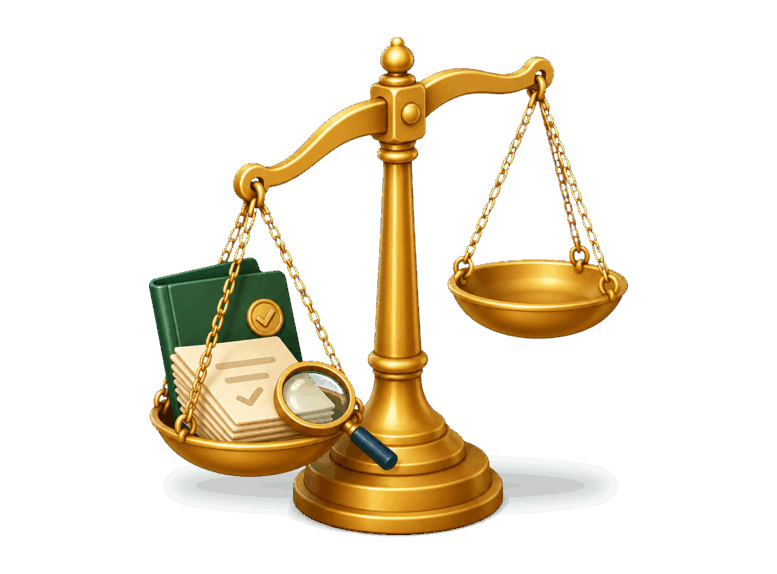
The burden of proof is the legal obligation to present enough evidence to prove a claim or allegation in court. The party with the burden of proof must convince the judge or jury that their version of the facts is more likely to be true or meets the legal standard required for the type of case.
In most civil lawsuits, such as personal injury claims, the plaintiff has the burden of proving that the defendant’s negligence caused their injuries. In criminal cases, prosecutors must prove the defendant’s guilt beyond a reasonable doubt, which is the highest standard of proof in the U.S. legal system.
Understanding the burden of proof helps plaintiffs know what evidence they need to build a successful case and why documentation, witness testimony, and expert opinions can make a significant difference.
Why Does the Burden of Proof Matter?
Every lawsuit starts with allegations, but courts require evidence before awarding damages or finding someone legally responsible. The burden of proof exists to ensure decisions are based on facts rather than assumptions.
Without this legal principle, anyone could make accusations without supporting evidence. The burden of proof protects both plaintiffs and defendants by requiring reliable proof before liability or guilt is established.
For plaintiffs in personal injury lawsuits, meeting the burden of proof is often the deciding factor between winning and losing a case.
Who Has the Burden of Proof?
The party bringing a legal claim usually has the initial burden of proof.
In Civil Cases
The plaintiff generally must prove that:
- The defendant owed them a legal duty.
- The defendant breached that duty.
- The breach caused the injury.
- The plaintiff suffered damages.
For example, in a car accident lawsuit, the injured driver must show that the other driver’s negligence caused the crash and resulting injuries.
In Criminal Cases
The prosecution carries the burden of proving every element of the crime beyond a reasonable doubt.
The defendant does not have to prove innocence because U.S. law presumes every person is innocent until proven guilty.
What Are the Different Standards of Proof?
Not every case requires the same amount of evidence. The law uses different standards depending on what’s at stake.
| Standard of Proof | Used In | Meaning |
| Beyond a Reasonable Doubt | Criminal cases | Leaves jurors with no reasonable uncertainty about guilt to make a guilty verdict. |
| Clear and Convincing Evidence | Certain civil matters, fraud, termination of parental rights, some punitive damages claims | Highly probable or reasonably certain. |
| Preponderance of the Evidence | Most civil lawsuits | More likely true than not (greater than 50%). |
The higher the standard, the stronger the evidence must be.
Burden of Proof in Personal Injury Cases
Most personal injury lawsuits use the preponderance of the evidence standard.
This means the plaintiff must show that it is more likely than not that the defendant caused the injury.
Evidence commonly includes:
- Police reports
- Medical records
- Photographs and videos
- Witness statements
- Expert testimony
- Accident reconstruction reports
- Employment records showing lost wages
Strong evidence helps satisfy the burden of proof and may encourage insurers to negotiate a fair settlement instead of proceeding to trial.
What Evidence Can Help Meet the Burden of Proof?
The quality of evidence often matters more than the quantity.
Examples include:
Medical Records
Medical documentation links injuries directly to the accident and demonstrates the severity of damages.
Witness Testimony
Independent witnesses can confirm how an accident occurred and support the injured person’s account.
Photos and Videos
Pictures from the accident scene, surveillance footage, and dashcam recordings can provide objective evidence.
Expert Witnesses
Medical specialists, economists, and accident reconstruction experts often explain complex issues that juries may not easily understand.
Physical Evidence
Damaged vehicles, defective products, or preserved accident scenes may strengthen a legal claim.
Burden of Production vs. Burden of Persuasion
The burden of proof actually consists of two related responsibilities.
Burden of Production
The obligation to produce enough evidence for the case to move forward.
If insufficient evidence exists, the judge may dismiss the claim before it reaches a jury.
Burden of Persuasion
The responsibility to convince the judge or jury that the required legal standard has been met.
Even when both parties present evidence, the side carrying the burden of persuasion must ultimately convince the fact-finder.
Can the Burden of Proof Shift During a Lawsuit?
Yes. While the plaintiff usually begins with the burden of proof, it can shift during litigation.
For example, after the plaintiff presents enough evidence supporting their claim, the defendant may need to introduce evidence supporting an affirmative defense, such as comparative negligence, assumption of risk, or self-defense.
Although certain burdens may shift, the plaintiff generally retains the ultimate burden of proving the essential elements of the case.
Examples of Burden of Proof
Car Accident
An injured driver claims another motorist ran a red light. Traffic camera footage, eyewitness testimony, and police reports help prove liability.
Slip and Fall
A customer slips on a wet grocery store floor. Surveillance footage, maintenance logs, and employee testimony may establish whether the store failed to address a dangerous condition.
Medical Malpractice
A patient alleges a surgeon acted below the accepted standard of care. Expert medical testimony is usually necessary to establish negligence.
Product Liability
A defective airbag fails to deploy during a collision. Engineering reports, recall notices, and expert analysis may help prove the manufacturer is responsible.
Why Burden of Proof Matters for Pre-Settlement Funding
Companies offering pre settlement funding evaluate the strength of a plaintiff’s case before approving funding. One of the biggest factors is whether the available evidence appears sufficient to meet the burden of proof.
Cases supported by clear liability, thorough medical records, credible witnesses, and documented damages may present lower litigation risk than cases with limited evidence or disputed facts.
While funding approval depends on many factors, demonstrating a strong likelihood of meeting the burden of proof can improve a plaintiff’s chances of qualifying.
Common Misconceptions About the Burden of Proof
It Always Means Proving Something Beyond Any Doubt
No. Only criminal cases require proof beyond a reasonable doubt. Most civil lawsuits use the lower preponderance of the evidence standard.
More Evidence Always Wins
Not necessarily. Courts evaluate the credibility, reliability, and relevance of evidence, not simply the volume.
The Defendant Must Prove They Did Nothing Wrong
Generally, no. In civil cases, the plaintiff usually bears the initial burden of proving the defendant’s liability.
Frequently Asked Questions
Can I still win my lawsuit if I don’t have eyewitnesses?
Yes, you may still have a strong case even without eyewitnesses. Medical records, photographs, surveillance footage, expert testimony, and other evidence can satisfy the burden of proof depending on the facts of your case. Many successful personal injury claims are proven through documentation rather than witness testimony.
Who has the burden of proof if both drivers blame each other for a car accident?
The injured plaintiff still has the burden of proving the other driver was at fault. However, each driver may present evidence supporting their version of events, such as dashcam footage, police reports, accident reconstruction, or witness statements. If your state follows comparative negligence laws, the court may assign a percentage of fault to each party.
What happens if important evidence is lost or destroyed?
Missing evidence does not automatically mean your case will fail, but it can make proving your claim more difficult. Courts may consider other available evidence, and in some situations, a party that intentionally destroys evidence may face legal penalties or adverse inferences. This is why preserving documents, photos, and physical evidence as early as possible is important.
Can I meet the burden of proof if the accident wasn’t reported to the police?
Possibly. Although a police report can strengthen your case, it is not always required to prove liability. Medical records, witness statements, surveillance videos, repair estimates, and other evidence may still establish what happened and support your claim.
Does the burden of proof change if the insurance company denies my claim?
No. Even if an insurance company disputes liability or denies your claim, you still have the responsibility to prove your case if you pursue compensation through a lawsuit. A denial simply means you may need stronger evidence or further legal action to recover damages.
How does burden of proof affect my chances of getting pre-settlement funding?
Legal funding companies often review whether your case appears likely to satisfy the burden of proof before approving funding. Cases with clear liability, documented injuries, and strong supporting evidence may present less risk than cases with conflicting evidence or uncertain fault. While every application is evaluated individually, the strength of the available evidence is an important consideration.
Disclaimer: This content is provided for general informational and educational purposes only and does not constitute legal advice. The burden of proof and applicable legal standards may vary by case type and jurisdiction. Consult a qualified attorney for advice regarding your specific circumstances. Express Legal Funding does not provide legal advice or influence the outcome of any legal claim.