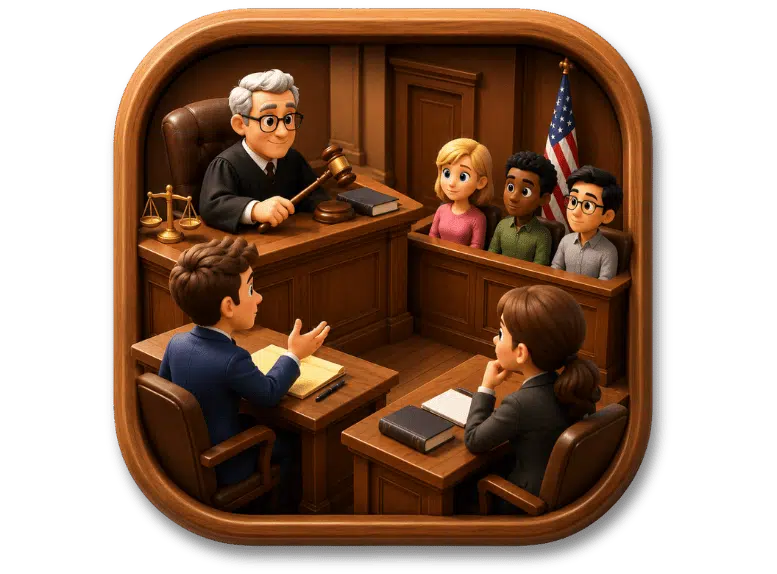
A trial is one of the most important stages in the legal process, but many cases never reach this point. In simple terms, a trial happens when the parties in a lawsuit cannot resolve their dispute through settlement, negotiation, or pretrial motions, so the case is presented in court for a judge or jury to decide.
Understanding what a trial means can help you better follow how lawsuits work, what happens in court, and why some cases take longer to resolve than others. This guide explains the legal definition of trial, the different types of trials, how trials compare to settlements and hearings, and what may happen before and after a trial.

What Does Trial Mean in Law?
In law, a trial is the formal process used to resolve a case when the parties cannot reach an agreement. During a trial, each side has the opportunity to present its version of the facts, question witnesses, introduce evidence, and argue why the judge or jury should rule in its favor.
Not every lawsuit goes to trial. Many civil cases settle before trial through negotiation, mediation, or other forms of dispute resolution.
Types of Trials
Civil Trial
A civil trial resolves disputes between individuals, businesses, or organizations. In personal injury cases, a civil trial may decide whether the defendant caused the plaintiff’s injuries and what compensation should be awarded.
Criminal Trial
A criminal trial determines whether a person accused of a crime is guilty beyond a reasonable doubt. The government prosecutes the case, and the accused has legal rights, including the right to a jury trial in many situations.
Jury Trial
A jury trial is decided by a group of jurors who listen to the evidence, follow the judge’s instructions, and reach a verdict.
Bench Trial
A bench trial is decided by a judge without a jury. The judge reviews the evidence, applies the law, and issues a decision.
What Are the Steps of a Trial?
Although every case is different, most trials follow a similar process in court. The exact steps may vary depending on whether the case is civil or criminal, but trials generally include the following stages:
1. Jury Selection
In a jury trial, attorneys and the judge select jurors through a process called voir dire. The goal is to choose jurors who can fairly and impartially decide the case.
2. Opening Statements
Each side gives an opening statement explaining its position, summarizing the evidence, and outlining what it expects to prove during the trial.
3. Presentation of Evidence
Both sides present evidence to support their claims or defenses. Evidence may include documents, photographs, videos, medical records, expert opinions, and physical evidence.
4. Witness Testimony and Cross-Examination
Witnesses testify under oath and may be questioned by both sides. Attorneys conduct direct examination when questioning their own witnesses and cross-examination when questioning opposing witnesses.
5. Closing Arguments
After all evidence has been presented, each side gives a closing argument summarizing the case and explaining why the judge or jury should rule in its favor.
6. Jury Instructions
In jury trials, the judge explains the legal standards the jurors must follow when deciding the case. This may include the burden of proof and the rules that apply to the claims or charges.
7. Deliberation
The jury reviews the evidence, discusses the case privately, and attempts to reach a verdict. In a bench trial, the judge deliberates and decides the outcome.
8. Verdict or Judgment
The trial concludes when the judge or jury issues a verdict or judgment. In civil cases, this may determine liability and damages. In criminal cases, it determines whether the accused is guilty or not guilty.
Trial vs. Settlement: What Is the Difference?
A trial is a court process that ends with a decision by a judge or jury. A settlement is an agreement between the parties to resolve the case without waiting for a final trial decision.
In personal injury lawsuits, many cases settle before trial because both sides may want to avoid the cost, delay, and uncertainty of a courtroom decision.
Trial vs. Hearing: What Is the Difference?
A hearing usually addresses a specific legal issue before or during a case, while a trial is the formal proceeding used to decide the main dispute.
For example, a hearing might decide whether certain evidence can be used. A trial decides the larger issue of who wins the case and what legal outcome should follow.
Trial vs. Litigation: What Is the Difference?
Litigation refers to the entire legal process of pursuing or defending a lawsuit. A trial is one possible stage within litigation.
A case can involve litigation without ever reaching trial. This happens when the parties settle, the case is dismissed, or the court resolves the dispute before trial.
What Happens Before a Trial?
The steps before a trial generally include:
- Filing the lawsuit
- Serving the defendant
- Discovery
- Depositions
- Motions
- Mediation or settlement talks
- Pretrial conference
These steps help both sides prepare their arguments, exchange information, and determine whether the case can be resolved before trial.
What Happens After a Trial?
After a trial concludes, the following may take place:
- The winning side may receive a judgment.
- The losing side may file post-trial motions.
- Either side may appeal in certain cases.
- Payment may not happen immediately.
- Some cases still settle after trial or during appeal.
How Long Does a Trial Take?
A trial can last one day, several days, several weeks, or longer, depending on the complexity of the case, the number of witnesses, the amount of evidence, and the court’s schedule.
The total time to reach trial is usually much longer than the trial itself. In many lawsuits, months or years of preparation may happen before the trial begins.
FAQs About Trials
What is a trial in simple terms?
A trial is a formal court process where both sides in a legal dispute present evidence, testimony, and arguments. A judge or jury then reviews the facts, applies the law, and decides the outcome of the case. Trials can happen in civil lawsuits, criminal cases, and other legal disputes.
What is the purpose of a trial?
The purpose of a trial is to resolve disputed facts and legal issues when the parties cannot settle the case. During trial, each side presents evidence and arguments so a judge or jury can decide who is legally responsible and what outcome should follow.
Does every lawsuit go to trial?
No. Most lawsuits do not go to trial. Many cases settle before trial through negotiation, mediation, or other settlement discussions. A lawsuit may also end through dismissal, summary judgment, or another court ruling before a full trial takes place. A trial usually happens when the parties cannot resolve the dispute earlier.
Who decides the outcome of a trial?
The outcome of a trial may be decided by a judge, a jury, or both, depending on the type of case and court procedure. In a jury trial, jurors decide key factual issues and may reach a verdict. In a bench trial, the judge reviews the evidence and decides the case.
What is the difference between a verdict and a judgment?
A verdict is the decision reached by a jury or judge after a trial. A judgment is the court’s official final order based on that verdict or ruling. In civil cases, the judgment may state who won the case, whether damages are owed, and what legal obligations must be followed.
Can a case settle during trial?
Yes. A case can settle during trial, before trial, or even after a verdict, while post-trial motions or appeals are pending. Settlement can happen whenever both sides agree to resolve the dispute without continuing the court process. This is common when parties want to avoid more delay, cost, or risk.
What are the risks of going to trial?
Going to trial can involve risk because the outcome is uncertain.
In a civil trial, the plaintiff may lose the case, receive less compensation than expected, or face delays from post-trial motions or appeals. The defendant may be ordered to pay damages, face a larger judgment than expected, or continue paying legal costs.
In a criminal trial, the accused may face penalties such as fines, probation, or incarceration if convicted. These risks are one reason many civil lawsuits settle before reaching trial, and many criminal cases are resolved through plea agreements. For prosecutors, it can secure a conviction without the time, cost, and uncertainty of a trial.
These risks are one reason many civil lawsuits settle before reaching trial.
Why do some personal injury cases go to trial?
Personal injury cases may go to trial when the parties disagree about fault, damages, injury severity, settlement value, or whether the defendant is legally responsible. Trials are more likely when the insurance company denies liability or refuses to make a fair settlement offer.
What happens at a personal injury trial?
At a personal injury trial, the injured person must prove that the defendant caused the accident or injury and that the damages claimed are legally supported. Evidence may include medical records, accident reports, witness testimony, expert opinions, photos, lost wage documentation, and proof of pain and suffering.
For plaintiffs waiting on a personal injury case, trial delays can create financial pressure, especially when medical bills, lost income, and daily expenses continue before the case is resolved.
Can pre-settlement funding help while waiting for trial?
Yes. Pre-settlement funding may help eligible plaintiffs cover living expenses while waiting for a lawsuit to settle or go to trial. Since legal funding is typically non-recourse, repayment is usually required only if the case results in a settlement or award.
How Express Legal Funding Can Help While Waiting for Trial
Trials can take time, and many personal injury plaintiffs face financial pressure long before their case is resolved. Express Legal Funding provides pre-settlement funding to eligible plaintiffs who are waiting for their lawsuit to settle or go to trial.
This type of funding can help cover essential expenses, such as rent, medical bills, utilities, groceries, and other daily costs. Since pre-settlement funding is typically non-recourse, repayment is generally required only if the case results in a settlement or award.