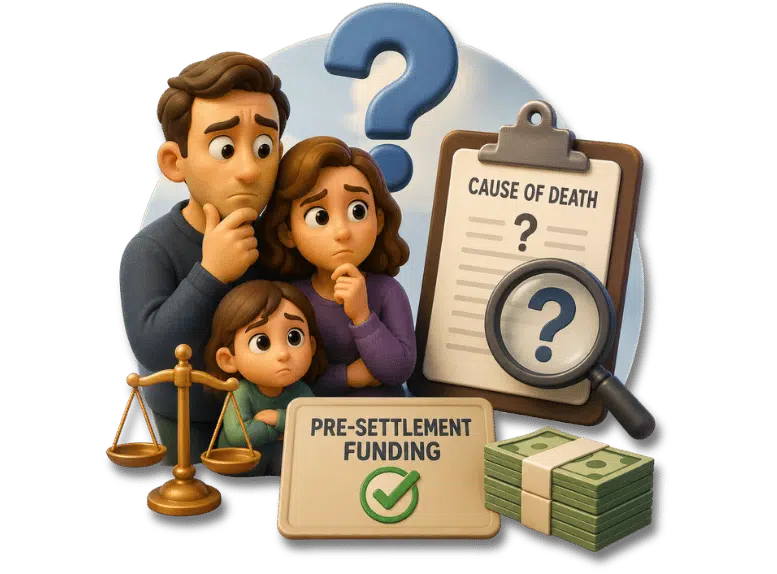
Wrongful death cases can become more complicated when the parties disagree about what caused the death or whether the defendant’s actions contributed to it.
For grieving families, this can raise an important question: will a disputed cause of death prevent them from qualifying for pre-settlement funding on a wrongful death claim?

The good news is that a disputed cause of death does not automatically disqualify a wrongful death case from legal funding.
However, it can make the underwriting review more detailed because funding companies need to evaluate the available evidence, attorney input, liability issues, insurance coverage, and potential recovery.
Because every wrongful death claim is different, funding eligibility is reviewed on a case-by-case basis.

Quick Answer: Can You Get Pre-Settlement Funding if the Cause of Death Is Disputed?
Yes, you may still qualify for pre-settlement funding if the cause of death is disputed. A causation dispute can make the review more detailed, but it does not automatically disqualify a wrongful death case.
Funding companies usually review medical records, expert opinions, attorney input, liability evidence, and insurance coverage before deciding.
Why Cause of Death Matters in Wrongful Death Claims

In a wrongful death case, the plaintiff generally must show that the defendant’s negligence, misconduct, or wrongful act contributed to the death.
When the cause of death is disputed, key questions may include:
- Whether the defendant’s actions caused or contributed to the death
- Whether another event played a role
- Whether pre-existing medical conditions were involved
- Whether medical treatment affected the outcome
- Whether the death was directly connected to the incident
These issues can affect liability, damages, settlement value, and the funding review process.
Does a Causation Dispute Automatically Disqualify You from Pre-Settlement Funding?
No. Many wrongful death cases involve disputes about liability, damages, or causation.
A disagreement over the cause of death simply means that additional evidence may be needed before the case can be fully evaluated. Legal funding companies generally review the total strength of the claim rather than denying a case solely because causation is disputed.
Common Reasons Why the Cause of Death May Be Disputed
Delayed Death After an Accident
In some cases, the deceased person survives the initial accident but passes away weeks or months later. The defense may argue that the death was caused by unrelated medical issues rather than accident-related injuries.
Medical Malpractice Claims
Healthcare providers may dispute whether a medical mistake caused the death or whether the outcome was unavoidable due to the patient’s underlying condition.
Relevant guide: 10 Types of Medical Malpractice Cases & Notable Cases List
Workplace Accidents
Employers, insurers, or defendants may challenge whether the death resulted from a workplace incident or another contributing factor.
Pre-Existing Medical Conditions
Defendants may argue that an existing illness or health condition was the primary cause of death rather than the alleged negligence.
Multiple Contributing Causes
Some cases involve more than one possible cause of death. For example, an accident, medical complications, and pre-existing conditions may all be considered during the legal review.
What Legal Funding Companies Review When the Cause of Death Is Disputed
| Factor | Why It Matters for Pre-Settlement Funding |
|---|---|
| Medical records | Help show whether the incident contributed to the death |
| Death certificate | May identify the official cause and manner of death |
| Autopsy report | Can provide objective findings when causation is disputed |
| Expert opinions | May explain complex medical, forensic, or accident-related issues |
| Liability evidence | Helps show whether the defendant may be legally responsible |
| Attorney assessment | Gives insight into case strength and recovery prospects |
| Insurance coverage | Affects the potential source and amount of recovery |
| Case status | Shows whether the case is early, in discovery, near mediation, or approaching trial |
| Settlement value | Helps determine whether an advance can reasonably be offered |
Funding companies usually review several factors together rather than relying on one document or one disputed issue.
Medical Records and Treatment History

Medical records are often among the most important pieces of evidence in a wrongful death case involving disputed causation.
Hospital records, emergency room reports, physician notes, diagnostic testing, treatment plans, and follow-up care documentation can help establish the timeline between the incident, the injuries, and the eventual death.
These records may help show whether the defendant’s actions contributed to the fatal outcome or whether another medical issue played a larger role.
Death Certificate and Autopsy Findings

A death certificate may identify the official cause and manner of death, but it may not always tell the full story. In disputed cases, attorneys and funding companies may also review autopsy findings, medical examiner reports, or coroner reports when available.
Autopsy reports can be especially helpful when the parties disagree about whether the death was caused by trauma, medical complications, illness, or another factor.

Expert Opinions
Expert opinions can be critical when the cause of death is contested. Medical specialists, forensic pathologists, accident reconstruction experts, workplace safety experts, or other qualified professionals may explain how the incident, injuries, medical treatment, or alleged negligence contributed to the death.
Expert analysis can help clarify complex causation issues and strengthen the funding review when the evidence supports the claim.
Liability Evidence
Evidence related to the underlying incident may help establish responsibility. Depending on the case, this may include police reports, workplace investigations, surveillance footage, witness statements, photographs, safety reports, or accident reconstruction evidence.
Strong liability evidence can sometimes help offset concerns created by a causation dispute.

Attorney Case Assessment
Attorney cooperation is often essential in wrongful death pre-settlement funding reviews. The attorney handling the case can explain the causation dispute, provide available evidence, confirm case status, and offer insight into the likelihood of recovery.
Without attorney input, the funding review may take longer or may not be able to move forward.
How a Causation Dispute Can Affect Pre-Settlement Funding Approval or Timing
A disputed cause of death does not automatically prevent approval, but it may affect how the application is reviewed.
| Factor | Possible Impact on Pre-Settlement Funding |
|---|---|
| Weak medical link | May reduce approval chances |
| Strong expert support | May improve approval chances |
| Pending autopsy report | May delay the review |
| Conflicting medical opinions | May require attorney clarification |
| Clear liability evidence | May strengthen the case despite causation concerns |
| Limited insurance coverage | May reduce the available funding amount |
| Early-stage litigation | May require additional documentation |
The stronger and clearer the supporting evidence, the easier it may be for a funding company to evaluate the claim.

What Applicants Can Do to Help the Review
Families applying for wrongful death pre-settlement funding can help the process by staying organized and working closely with their attorney.
Helpful steps may include:
Speak With Your Attorney First
Your attorney can explain how the causation dispute affects the case and whether funding may make sense based on the current evidence.
Gather Available Medical Records
Medical records, hospital reports, and treatment history may help show how the death was connected to the incident.
Provide the Death Certificate or Autopsy Report if Available
These documents may help clarify the official cause of death and provide important evidence for review.
Ask About Expert Review
If experts are involved, their opinions may help support the claim and explain complex causation issues.
Be Honest About Pre-Existing Conditions
Pre-existing conditions do not automatically defeat a wrongful death claim, but they may need to be addressed clearly during the case review.
FAQs About Disputed Cause of Death and Pre-Settlement Funding
Can I get wrongful death funding before the autopsy is complete?
Possibly, but a pending autopsy may delay the review. Some pre-settlement funding companies may wait for the report if causation is unclear, while others may consider available medical records, attorney input, liability evidence, and insurance coverage before making a decision.
Can pre-existing conditions prevent wrongful death funding?
Not automatically. A pre-existing condition may make causation more complicated, but it does not always defeat a wrongful death claim. Funding companies may review whether the defendant’s actions contributed to, worsened, or accelerated the fatal outcome.
Can a causation dispute reduce the amount of funding I can receive?
Yes, it can. If the dispute creates uncertainty about liability, damages, or settlement value, a funding company may approve a smaller amount or request more documentation before making a decision. Strong medical evidence, expert support, and other forms of evidence, like a police report, may help improve the review.
Relevant guide: How Much Pre-Settlement Funding Can I Get on My Case?
Does the death certificate have to support the lawsuit?
It helps, but it may not be the only evidence considered. Funding companies may also review medical records, expert opinions, autopsy findings, witness statements, accident reports, and attorney analysis when evaluating a wrongful death funding request.
What if experts disagree about the cause of death?
Conflicting expert opinions are common in complex wrongful death cases, especially when both the plaintiff and the defense hire their own experts. A funding company may review the available expert reports, attorney assessment, medical records, and liability evidence before deciding whether the claim supports funding.
Can I qualify if the defendant denies responsibility for the death?
Possibly. Defendants often deny liability in wrongful death lawsuits. Pre-settlement funding eligibility usually depends on the overall strength of the evidence, available insurance coverage, state negligence laws, and the potential value of the claim.
Key Takeaways
- A disputed cause of death does not automatically prevent pre-settlement funding approval.
- Funding companies usually review the full strength of the wrongful death claim.
- Medical records, death certificates, autopsy reports, expert opinions, and liability evidence may all be considered.
- Causation disputes may affect approval timing, documentation needs, or available funding amounts.
- Attorney cooperation is often important during the funding review process.
- Each wrongful death case is reviewed based on its specific facts, evidence, and recovery potential.

Helping Families Navigate Complex Wrongful Death Claims
At Express Legal Funding, we understand that wrongful death cases can involve difficult medical, legal, and financial questions. When the cause of death is disputed, our team works with families and their attorneys to review the available information and explain possible pre-settlement funding options with care and transparency.
We do not decide legal causation or determine who is responsible for the death. Our role is to evaluate whether funding may be available based on the case facts, attorney cooperation, available evidence, and potential recovery.
Explore Your Wrongful Death Legal Funding Options
If your family is pursuing a wrongful death claim and the cause of death is being disputed, Express Legal Funding may still be able to review your case.
Applying is free, and approval depends on the facts of your claim, available evidence, your lawyer’s cooperation, insurance coverage, and potential recovery. Call (888) 232-9223 or apply online today to discuss your pre-settlement funding options.
Disclaimer
This article is for general educational purposes only and is not legal, financial, tax, or medical advice. Wrongful death claims involving disputed causation are highly fact-specific. Express Legal Funding does not determine legal causation, liability, or case value. Always consult your attorney regarding your legal rights, evidence, and funding options.