

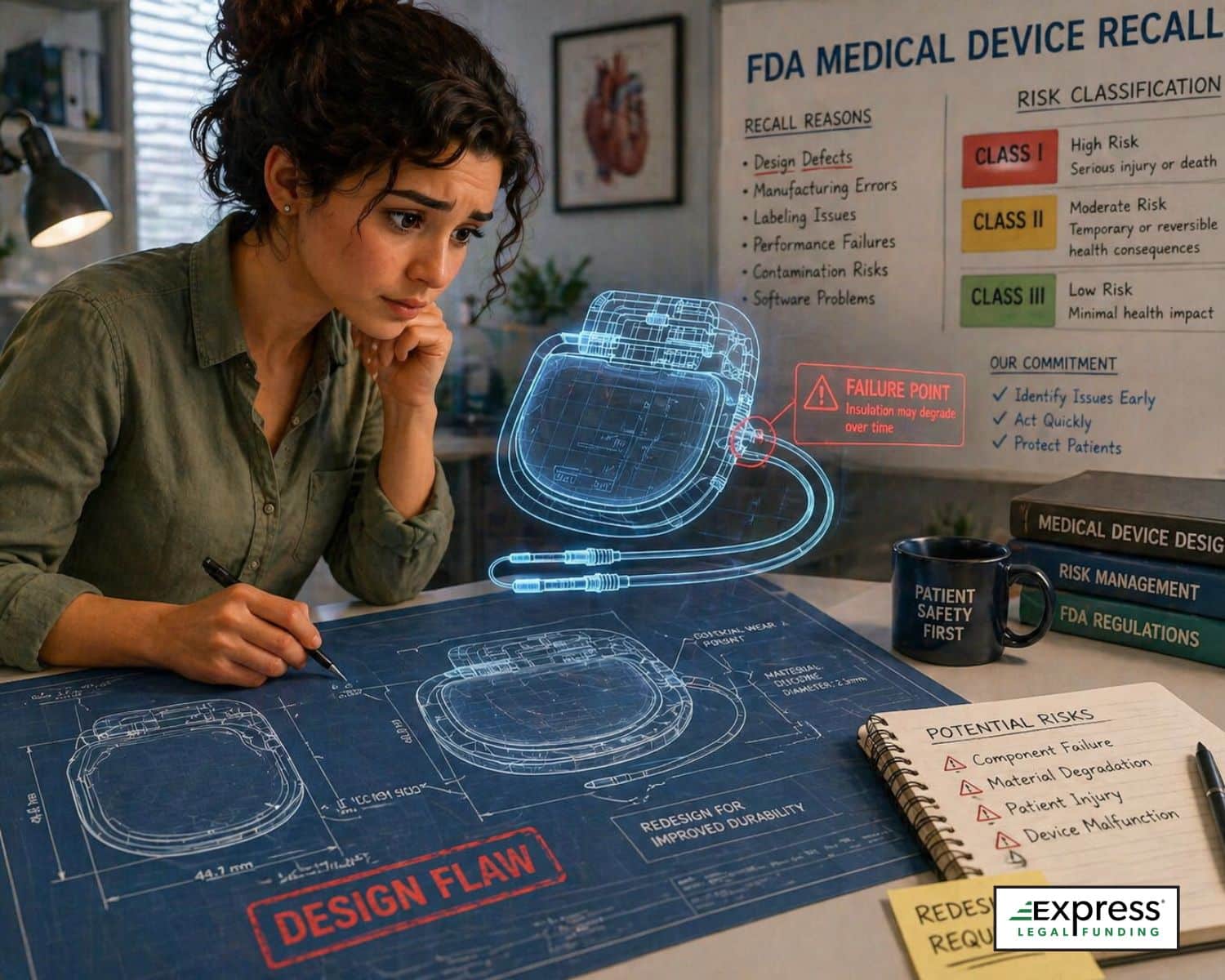
Medical devices are designed to help people heal, manage serious conditions, and improve quality of life. But when a device is defective, mislabeled, contaminated, or unsafe, the consequences can be frightening and deeply personal.
An FDA medical device recall can raise urgent questions: Is the device still safe to use? Should you contact your doctor? Could the recall affect your health, treatment plan, or legal rights?
This guide explains how FDA medical device recalls work, why they happen, how the FDA classifies recall risks, and what steps patients may need to take if they are affected.
It also covers potential legal options for people harmed by recalled medical devices, including when a recall may support a product liability or medical malpractice claim.
What Is an FDA Medical Device Recall?
An FDA medical device recall happens when a manufacturer, distributor, or the U.S. Food and Drug Administration takes action to fix a problem with a medical device.
Depending on the issue, the recall may involve removing the device from the market, correcting its labeling, repairing it, replacing it, or warning patients and healthcare providers about safety concerns.

A medical device recall does not always mean the product must be physically returned. In many cases, the recall may involve updated instructions, software corrections, additional warnings, or changes to how the device should be used.
Medical device recalls are usually initiated when a product creates a safety concern, violates FDA requirements, or fails to perform as intended.
1. The Device Poses a Serious Health Risk
A device may be recalled if it could cause serious injury, severe complications, or death. These risks may come from design defects, manufacturing errors, labeling mistakes, software problems, or device malfunctions.
High-risk recalls are often classified as Class I recalls, which are the FDA’s most serious recall category. These situations require urgent attention because continued use of the device may put patients at significant risk.
2. The Device Violates FDA Rules
Medical devices must follow FDA requirements under federal law. A recall may occur if a device is mislabeled, misbranded, improperly marketed, unapproved, or sold without the required FDA clearance or approval.
These violations matter because they can affect whether doctors and patients have accurate information about how the device should be used and whether it was legally allowed on the market.
3. The Device Fails to Perform Properly
A recall may also happen when a device does not work as expected. Problems may be discovered through inspections, patient complaints, adverse event reports, post-market surveillance, or healthcare provider reports.
Examples include device malfunctions, durability issues, software errors, sterility concerns, or failure to meet required manufacturing and quality standards.
Understanding FDA medical device recalls helps patients and healthcare providers recognize potential risks, follow recall instructions, and take appropriate steps to protect patient safety.
You can check whether a device has been recalled by searching the FDA’s Medical Device Recall Database.
Why FDA Medical Device Recalls Happen: 6 Common Causes
Medical devices are used to diagnose, monitor, treat, and sometimes sustain life. When one of these products is defective, mislabeled, contaminated, or unreliable, the risk to patients can be serious.
FDA device recalls happen when a manufacturer, distributor, or the FDA identifies a problem that may affect patient safety, device performance, or regulatory compliance. Depending on the issue, the recall may involve removing the device, repairing it, replacing it, updating instructions, or warning healthcare providers and patients.
The most common reasons medical devices are recalled include:
1. Defective Design

A design defect occurs when a flaw exists in the device’s blueprint, meaning the product is inherently unsafe—even when manufactured exactly as intended. These issues often stem from inadequate research, poor material selection, or failure to fully account for real-world usage conditions.
For example, a surgical implant may cause internal tissue damage due to its shape, size, or the materials used. Even if every unit is produced perfectly, the risk remains because the flaw is built into the design itself.
Design defects are particularly serious and frequently lead to Class I FDA medical device recalls, the highest risk category, because they can result in severe injury, long-term complications, or death. These recalls often require widespread removal of the product from the market and may trigger redesigns or permanent discontinuation.
Relevant read: Knee Replacement Lawsuit: Exactech, Zimmer, Stryker
2. Manufacturing Defects
Manufacturing defects occur during the production process and typically affect only certain batches or units rather than the entire product line. These issues can arise from equipment malfunctions, substandard materials, lack of quality control, or human error on the assembly line.
For instance, pacemakers assembled with incorrect circuitry may experience premature battery failure, putting patients at immediate risk. Similarly, inconsistent welding, contamination during assembly, or improper calibration can compromise device integrity.
Even minor production errors can have life-threatening consequences, especially for devices that support critical bodily functions. As a result, FDA device recall alerts related to manufacturing defects often involve targeted lot recalls, production halts, and corrective action plans to prevent recurrence.
3. Labeling Errors
Labeling errors are a common but often underestimated cause of FDA medical device recalls. These issues arise when instructions, warnings, or product information are incorrect, incomplete, or misleading, leading to improper use by healthcare providers or patients.
Examples include incorrect dosage instructions, missing safety warnings, inaccurate calibration guidelines, or mislabeled packaging. For instance, sterile syringes distributed without expiration dates leave users unaware of potential contamination risks over time.
Because medical devices rely heavily on clear and accurate instructions for safe use, even small labeling mistakes can result in misuse, ineffective treatment, or patient harm. FDA recalls in this category often require updated labeling, revised instructions for use (IFU), and communication to healthcare providers.
4. Performance Failures During Use
Some devices pass initial testing and regulatory review but fail under real-world conditions. These performance failures can occur due to material fatigue, software glitches, environmental exposure, or unanticipated usage scenarios.
For example, a diagnostic device that produces false-negative results may delay critical treatment, potentially worsening a patient’s condition. Similarly, devices with embedded software may malfunction due to bugs, cybersecurity vulnerabilities, or compatibility issues with other systems.
Performance-related FDA medical device recalls highlight the importance of post-market surveillance and ongoing quality monitoring. These recalls may lead to software updates, product modifications, or revised usage guidelines to mitigate risk.
5. Contamination or Compromised Sterility

Many medical devices—especially those used in surgeries or invasive procedures—must meet strict sterility standards. Contamination can occur during manufacturing, packaging, storage, or transportation, rendering the device unsafe for use.
For instance, surgical instruments found to contain bacterial contamination due to improper sterilization processes can expose patients to serious infections. Similarly, compromised packaging seals may allow microorganisms to enter sterile products.
Medical device recalls related to contamination are taken very seriously because they pose an immediate risk of infection, sepsis, or other complications. These situations often result in urgent recalls, facility inspections, and stricter sterilization protocols.
6. Post-Market Findings
Not all risks are identified before a device reaches the market. Post-market findings emerge after widespread use, when healthcare providers, patients, or researchers report unexpected side effects, complications, or long-term risks.
For example, an infusion pump may later be linked to the formation of air bubbles in IV lines—an issue not detected during clinical trials. As more data becomes available, patterns may reveal previously unknown hazards.
The FDA relies on systems like adverse event reporting (MedWatch) and real-world evidence to identify these risks. Recalls based on post-market findings demonstrate how FDA medical device recalls serve as an ongoing safety mechanism, helping to protect patients even after products are approved and distributed.
Bottom Line
FDA medical device recalls are not always a sign of negligence—they are a critical part of the regulatory safety system designed to protect public health. When risks are identified, manufacturers are required to take corrective action, notify stakeholders, and, in some cases, remove the device from circulation immediately.
For patients and healthcare providers, staying informed is essential. Monitoring official sources like the FDA Medical Device Recall Database can help identify potential risks and ensure safer medical care decisions.
Example: Philips CPAP Device Recall

One of the most widely known FDA medical device recalls involved Philips Respironics CPAP and BiPAP machines. These devices, used to treat sleep apnea, were recalled after it was discovered that a foam component inside the machines could break down over time.
This degradation could release harmful particles and chemicals into the air pathway, potentially exposing users to respiratory issues, toxic effects, or even cancer risks.
The recall affected millions of devices worldwide and led to significant concern among patients who relied on these machines for nightly breathing support. In many cases, patients were advised to consult their healthcare providers before stopping use, as discontinuing treatment could pose its own health risks.
This example highlights how FDA medical device recalls can involve complex risk assessments, where both the defect and the importance of the device must be carefully weighed before taking action.
How the FDA Classifies Medical Device Recalls
When a medical device is found to be unsafe, defective, or potentially harmful, the FDA oversees the recall process to help protect patients, healthcare providers, and the public. The FDA usually does not physically remove the product itself — instead, it reviews the manufacturer’s recall strategy, monitors corrective actions, and helps ensure the recall is handled properly.
The FDA classifies recalls based on the level of health risk involved. The more serious the potential harm, the more urgent the recall response.
The FDA uses three recall classes:
- Class I: The most serious type of recall
- Class II: A moderate-risk recall
- Class III: The lowest-risk recall
Class I Recall: Most Serious Risk

A situation where there is a reasonable probability that using the device will cause serious adverse health consequences or death.
Example: A malfunctioning heart valve that can fail during surgery, or a pacemaker with battery defects that can stop without warning.
- Impact: Immediate action is required. Devices are often pulled from hospitals and clinics urgently, and healthcare providers are notified directly.
- FDA Monitoring: Highly rigorous; may involve public notifications, press releases, and updates in the FDA’s Recalls, Market Withdrawals & Safety Alerts database.
Class II Recall: Moderate Risk
A situation where device use may cause temporary or medically reversible adverse health consequences, or where the probability of serious injury is remote.
Example: A surgical tool with a minor manufacturing defect that slightly delays operation time but is unlikely to cause lasting harm.
- Impact: The device might still be usable in certain circumstances, but requires correction, re-labeling, or replacement.
- FDA Monitoring: Moderate. The manufacturer must report actions, and updates are logged in the FDA’s recall system.
Class III Recall: Lowest Risk
A situation where using the device is unlikely to cause any adverse health consequences, but the product still violates FDA labeling or manufacturing regulations.
Example: A stethoscope with incorrect branding or missing instructional diagrams that don’t affect the device’s function.
- Impact: Usually handled quietly with corrections, updates to instructions, or voluntary withdrawals.
- FDA Monitoring: Less frequent public attention, but still documented for regulatory compliance.
Key Points in the Classification Process
1. Risk Assessment
At the core of FDA medical device recall classification is a thorough risk assessment. That’s where the FDA evaluates both the likelihood (probability) and severity (impact) of harm if the device continues to be used. This process considers real-world data, including adverse event reports, clinical outcomes, device failure rates, and patient exposure levels.
For example, a device that has a small chance of causing minor irritation may be classified differently from one with a moderate chance of causing life-threatening complications. The FDA uses this analysis to determine whether a recall falls under Class I (serious risk), Class II (temporary or reversible harm), or Class III (low risk). This structured approach ensures that patient safety remains the top priority while guiding the urgency and scope of the recall.
2. Collaboration with Manufacturers
Most FDA medical device recalls are voluntarily initiated by manufacturers or distributors once a problem is identified through internal testing, customer complaints, or post-market surveillance.
Companies are expected to act quickly to investigate the issue and develop a corrective action plan, which may include product removal, repair, or updated instructions.
However, the FDA plays a critical oversight role by reviewing recall strategies, monitoring execution, and ensuring compliance with federal regulations. In rare but serious cases—especially when companies fail to act—the FDA has the authority to mandate recalls or take enforcement actions, including product seizures or injunctions.
This collaborative yet regulated process helps ensure timely and effective risk mitigation.
3. Public Notification
The level of public communication during an FDA medical device recall depends largely on the severity of the risk. High-risk recalls, particularly Class I recalls, often trigger widespread public alerts, including FDA safety communications, press releases, and direct notifications to healthcare providers, hospitals, and distributors.
For lower-risk recalls, communication may be more targeted, focusing on affected facilities or specific user groups. The goal is to ensure that all relevant parties—patients, physicians, and supply chain stakeholders—are informed quickly so they can take appropriate action, such as discontinuing use, returning the device, or following updated safety instructions.
Effective communication is essential to prevent further harm and limit exposure.
4. Post-Recall Follow-Up
After a recall is initiated, the FDA conducts post-recall monitoring and effectiveness checks to verify that the corrective actions have been properly implemented. This may involve audits, inspections, and progress reports from the manufacturer to ensure that defective devices are fully accounted for and removed or corrected.
The FDA may also assess whether healthcare providers and distributors have complied with recall instructions and whether patients were adequately notified. In some cases, additional actions—such as expanded recalls or updated safety warnings—may be required if initial efforts are insufficient.
This follow-up process ensures that FDA device recall notices are not just announced, but successfully executed, ultimately reinforcing accountability, regulatory compliance, and long-term patient safety.
Who Is Liable in a Medical Device Recall?
When a medical device is recalled, determining liability involves identifying which party is responsible for the defect or harm. In many cases, liability can fall upon:
- Manufacturers: Manufacturers are often the primary parties held responsible in cases involving device recalls. Liability can arise when a device is improperly designed, poorly manufactured, or lacks adequate warnings and instructions for safe use. This includes failures in research and development, inadequate testing, or not complying with FDA regulatory requirements such as quality control standards and premarket approvals.
- Distributors or Retailers: Distributors and retailers play a critical role in the supply chain and may share liability in FDA medical device recall if they knowingly—or negligently—sell or distribute defective medical devices. This can occur when these parties fail to act on recall notices, continue supplying products after safety concerns have been raised, or do not properly store and handle devices according to manufacturer guidelines.
- Healthcare Providers: Although less common, healthcare providers such as doctors, nurses, or hospitals can be implicated in cases tied to FDA device recalls under certain circumstances. Liability may arise if a provider uses a device improperly, ignores updated safety warnings, or fails to follow proper storage and handling protocols that contribute to patient harm.
- Testing Entities: Testing laboratories and third-party evaluators are responsible for assessing the safety, performance, and compliance of medical devices before they reach the market. If these entities fail to identify critical flaws—such as design weaknesses, contamination risks, or performance issues—they may also be implicated in FDA medical device recalls.
Liability often hinges on whether the recall was issued in time and whether injured parties can prove the defect directly caused harm. A recall itself does not absolve a manufacturer of responsibility—it may serve as evidence that the product was unsafe.
How Recalls Actually Work (Step-by-Step)
1. Problem Identification
Recalls begin when a potential safety risk or defect is identified, often through multiple channels such as manufacturer quality control checks, FDA inspections, adverse event reporting systems (like MedWatch), consumer complaints, or feedback from healthcare professionals. Early detection is critical because it allows companies and regulators to act before widespread harm occurs.
In many cases, patterns emerge over time—such as repeated device malfunctions or unexpected patient outcomes—that trigger deeper investigation. This initial phase is a crucial starting point in FDA medical device recalls, as it determines whether the issue is isolated or systemic.
Example: A medical device is found to contain a faulty component that may fail during use, potentially putting patients at immediate risk during a critical procedure.
2. Notification to Regulatory Authorities
Once a defect or safety concern is confirmed, manufacturers are legally obligated to notify regulatory agencies, including the FDA. This notification must include detailed documentation, such as the nature of the defect, how it was discovered, affected lot or serial numbers, distribution data, and a preliminary risk assessment.
Timely reporting is essential to ensure that regulators can evaluate the scope of the issue and determine appropriate next steps. Failure to properly report can result in regulatory penalties, fines, or enforcement actions. This stage formally initiates the regulatory process behind FDA medical device recalls, ensuring transparency and accountability.
3. Classification of the Recall
After reviewing the submitted information, the FDA assigns a recall classification based on the severity and likelihood of harm. This classification determines how urgently the recall must be handled and how broadly information is communicated.
- Class I: Most serious — there is a reasonable probability that the device could cause serious injury or death.
- Class II: Moderate risk — the device may cause temporary or medically reversible health issues, or there is a slight chance of serious harm.
- Class III: Lowest risk — defects are typically administrative or labeling-related, with minimal likelihood of causing harm.
This classification system is a cornerstone of FDA medical device recalls, helping prioritize response efforts and allocate resources effectively to protect public health.
4. Public Notification
Once the recall strategy is approved, public communication begins. Information is published through FDA recall databases, safety alerts, company announcements, and sometimes national news outlets, depending on the severity of the risk.
Healthcare providers, hospitals, and pharmacies often receive direct notifications, allowing them to act quickly to prevent further use of the affected device. For high-risk recalls, especially Class I, communication is more aggressive and widespread to ensure maximum awareness.
Clear and timely notification is essential in FDA medical device recalls, as it enables both professionals and the public to take immediate steps to reduce potential harm.
5. Distribution Chain Alert
At this stage, manufacturers and sometimes regulators issue formal alerts across the entire distribution chain, including wholesalers, retailers, and healthcare facilities. These parties are instructed to immediately stop selling, distributing, or using the recalled device.
They are also required to identify and isolate affected inventory, often using tracking systems, batch numbers, and shipping records. This step helps prevent additional units from reaching patients and ensures that the recall is effectively contained.
A well-executed distribution chain alert is critical to limiting exposure and is a key operational step in managing large-scale recalls.
6. Consumer Instructions
Consumers and patients are provided with clear, actionable guidance on what to do next. Instructions vary depending on the type of device and level of risk, but may include stopping use immediately, returning the product, safely disposing of it, or seeking medical evaluation.
In some cases, especially for implanted or critical-use devices, patients may be advised to consult their healthcare provider for monitoring, diagnostic testing, or potential removal/replacement procedures.
Providing accurate and easy-to-understand instructions helps minimize confusion and ensures that affected individuals take the appropriate steps to protect their health and safety.
7. Corrective Actions or Replacement
Once the recall is underway, manufacturers implement corrective actions to address the issue. Depending on the situation, this may involve repairing the device, issuing replacements, providing refunds, updating software, or redesigning components.
In healthcare-related recalls, corrective measures can extend beyond the product itself. Patients may require follow-up care, additional treatment, or alternative medical solutions to address complications caused by the defective device.
These actions are essential not only to resolve the immediate issue but also to restore confidence in the product and prevent future incidents.
8. Ongoing Monitoring and Close-Out Report
Even after corrective measures are implemented, the recall process does not end immediately. Manufacturers must submit ongoing progress reports to the FDA, detailing how many units have been recovered, corrected, or accounted for.
The FDA may conduct audits, inspections, and effectiveness checks to verify that all reasonable efforts have been made to remove or fix the defective devices. Only after confirming that the recall has been successfully executed will the FDA officially close the case.
This final stage ensures that FDA medical device recalls are fully resolved, reinforcing long-term safety, regulatory compliance, and accountability across the industry.
What This Means for You as a Patient
If you learn that your medical device has been recalled, do not panic or make sudden medical decisions without guidance. Some recalls require patients to stop using a device immediately, while others involve updated instructions, monitoring, repairs, replacement, or follow-up care.

1. Read the Recall Notice Carefully
Start by reviewing the official recall notice from the FDA, manufacturer, or your healthcare provider. The notice should explain why the device was recalled, which products are affected, the level of risk, and what users should do next.
2. Verify Your Product, Model, and Lot Number
Not every recall applies to every device. Compare the notice with your device’s model number, lot number, batch code, serial number, or expiration date. This helps confirm whether your specific device is affected.
3. Contact Your Healthcare Provider
Speak with your doctor before stopping use, especially if the device is implanted, prescription-based, or essential to ongoing treatment. In some cases, continued use may be safer than stopping suddenly.
4. Follow the Recommended Instructions
Depending on the recall, you may be told to stop using the device, return it, replace it, schedule a repair, update software, follow new safety instructions, or receive medical monitoring. Follow the official guidance rather than guessing.
5. Monitor Symptoms and Keep Records
Track any symptoms, complications, device malfunctions, medical visits, or expenses related to the recalled device. Keep copies of recall notices, product labels, receipts, prescriptions, and communications with your doctor or the manufacturer.
6. Follow Disposal, Return, or Replacement Instructions
Do not throw away a recalled device unless the recall notice specifically tells you to do so. Some products must be returned, repaired, replaced, or handled in a specific way to protect patients, caregivers, and others.
7. Check for Refunds, Reimbursement, or Replacement Options
Some recalls may include refunds, replacement devices, repairs, or reimbursement for certain costs. Review the manufacturer’s recall instructions and ask your healthcare provider or the company what options are available.
8. Consider Legal Guidance If You Were Harmed
If the recalled device caused an injury, infection, failed treatment, additional surgery, or other damages, you may want to speak with a medical device injury attorney. A recall does not automatically prove a legal claim, but it may support one if the defect caused harm.
9. Stay Updated
Recall guidance can change as the FDA or manufacturer learns more. Continue checking FDA updates, manufacturer notices, and messages from your healthcare provider so you do not miss expanded recall information or new safety instructions.
Legal Rights in a Medical Device Recall
A recall does not automatically mean you have a lawsuit. However, if you were harmed by a recalled medical device, the recall notice can significantly strengthen your legal case by proving the defect exists and that safety concerns have been officially recognized by regulatory authorities such as the U.S. Food and Drug Administration (FDA).
When a Recall May Support Your Lawsuit
You may have stronger legal grounds if:
- You were injured by the device – This includes physical harm, worsening of your medical condition, or necessity for additional surgeries or treatments.
- The manufacturer knew or should have known about the defect earlier – If evidence shows they delayed action despite consumer complaints or internal testing results.
- The defect violated FDA safety rules – If the device failed to meet required safety or regulatory standards, this can be proof of negligence.
Possible Legal Pathways
If the evidence supports your case, there are several legal routes a patient can pursue:
- Product Liability Claims – Lawsuits against manufacturers or sellers for producing and distributing a defective device. This can include defects in design, manufacturing, or marketing (e.g., failing to warn users).
- Medical Malpractice Claims – If healthcare providers continued to use a recalled device after warnings, or failed to inform you in time, their actions could be considered negligent.
- Class Action Lawsuits – Multiple patients harmed by the same recalled medical device can join together to hold the company accountable. This collective approach can strengthen bargaining power and potentially secure higher settlements.
Product Liability vs. Medical Malpractice
While both can involve patient injuries, product liability and medical malpractice are distinct legal concepts:
- Product Liability
- Centers on defective products — including faulty medical devices.
- Holds manufacturers, suppliers, or sellers accountable for flaws in design, manufacturing, or labeling.
- Requires proof that the defect existed when the product left the manufacturer’s control and directly caused injury.
- Medical Malpractice
- Centers on negligent medical care or professional errors.
- Holds healthcare providers (doctors, nurses, hospitals) accountable for breaching the standard of care.
- Requires proof that the provider’s actions or omissions caused harm.
In some cases, both claims can be filed together—if a defective medical device harmed a patient but the provider also failed to diagnose or act appropriately.
Class Action Lawsuits for Medical Devices
A class action lawsuit allows multiple victims of the same defective medical device to join together in a single legal action. This approach is common when:
- The defective device was widely distributed.
- Many people suffered similar injuries or losses.
- The litigation would be too costly for individuals to pursue separately.
Advantages of Class Actions:
- Strength in numbers—pooling resources and evidence.
- Increased efficiency in court proceedings.
- Potentially larger settlements or judgments from manufacturers.
Considerations:
- Individual circumstances can vary, so joining a class may limit your right to file a separate lawsuit.
- Some victims may opt for a personal injury claim instead of joining a class if their damages are unique or particularly severe.
Relevant read: Hip Replacement Lawsuit Settlements: 7 Cases That May Qualify
Final Thoughts: What to Do After an FDA Medical Device Recall
FDA medical device recalls are an important part of the patient safety system. They help identify defective, unsafe, mislabeled, or unreliable devices before they cause further harm. Still, a recall can be stressful for patients, especially when the device is implanted, medically necessary, or already linked to complications.
If you are affected by a recalled medical device, start by reviewing the official recall notice, confirming whether your specific product is included, and speaking with your healthcare provider before making changes to your care plan.
If the device caused injury, additional treatment, lost income, or other damages, you may also want to speak with an attorney about your legal options.
For people pursuing a legal claim after being harmed by a recalled device, the financial pressure can be difficult. Medical bills, missed work, and daily expenses can add stress while the case is pending.
Express Legal Funding provides pre-settlement funding to eligible plaintiffs, helping them access money during the legal process without waiting for their case to resolve.
FAQs: FDA Medical Device Recalls
What should I do if my medical device is recalled?
If your medical device is recalled, start by reviewing the official recall notice and confirming whether your specific model or lot number is affected. Do not stop using the device without guidance. Contact your healthcare provider to determine the safest next steps based on your condition and the recall instructions.
Are all FDA medical device recalls dangerous?
No. Not all recalls involve serious health risks. The FDA classifies recalls into three levels:
- Class I: High risk of serious injury or death
- Class II: Temporary or reversible health risks
- Class III: Low risk or regulatory issues
The level of danger depends on the classification and the specific defect.
Can I sue for a recalled medical device?
Yes, but only if the recalled device caused harm. A recall alone does not guarantee a lawsuit. You may have a case if you suffered injury, complications, or financial loss due to a defective device. Claims may involve product liability, medical malpractice, or class action lawsuits.
How do I check if my medical device is recalled?
You can check if your device has been recalled by searching the FDA’s Medical Device Recall Database. Enter the device name, manufacturer, or model number, and compare it with your product details, including lot or serial numbers.
Do I need to stop using a recalled medical device immediately?
Not always. Some recalls require immediate discontinuation, while others involve monitoring, updates, or repairs. If the device is implanted or essential to your health, stopping use suddenly may be dangerous. Always follow the recall notice and consult your healthcare provider before making changes.

